

How to Maintain Your Honda for Nebraska Weather
How to Maintain Your Honda for Nebraska Weather
Living in Nebraska means experiencing just about every season — sometimes all in the same week. From freezing winters and icy roads to hot summers and sudden temperature swings, local weather can take a toll on your vehicle. Staying on top of Honda maintenance in Nebraska is essential to keep your car reliable, safe, and running efficiently year-round.
Below, we’ll break down how Nebraska weather impacts your Honda and what you can do to protect it through every season.

Honda Accord, CR-V, and Ridgeline driving through snowy Nebraska farmland with winter road conditions and rural landscape in the background.
Seasonal Challenges in Nebraska
Nebraska drivers face unique conditions that can accelerate wear and tear on vehicles:
-
Cold winters can drain batteries, thicken fluids, and reduce tire pressure
-
Snow, ice, and road salt increase corrosion and stress braking systems
-
Hot summers strain cooling systems, belts, and hoses
-
Rapid temperature changes cause fluids to expand and contract, impacting performance
These challenges make routine inspections and seasonal maintenance especially important for Honda owners in the Omaha area.
Recommended Maintenance Schedule for Nebraska Drivers
Following Honda’s recommended service intervals — with a few regional adjustments — helps keep your vehicle prepared for unpredictable weather.
Every 5,000–7,500 miles:
-
Oil and filter change
-
Tire rotation
-
Brake inspection
Seasonally (especially before winter):
-
Battery testing
-
Tire tread and pressure check
-
Fluid top-offs and inspections
Annually:
-
Alignment check
-
Brake service (as needed)
-
Cooling system inspection
Sticking to a consistent Honda maintenance schedule in Omaha ensures your vehicle is ready for both winter storms and summer heat.
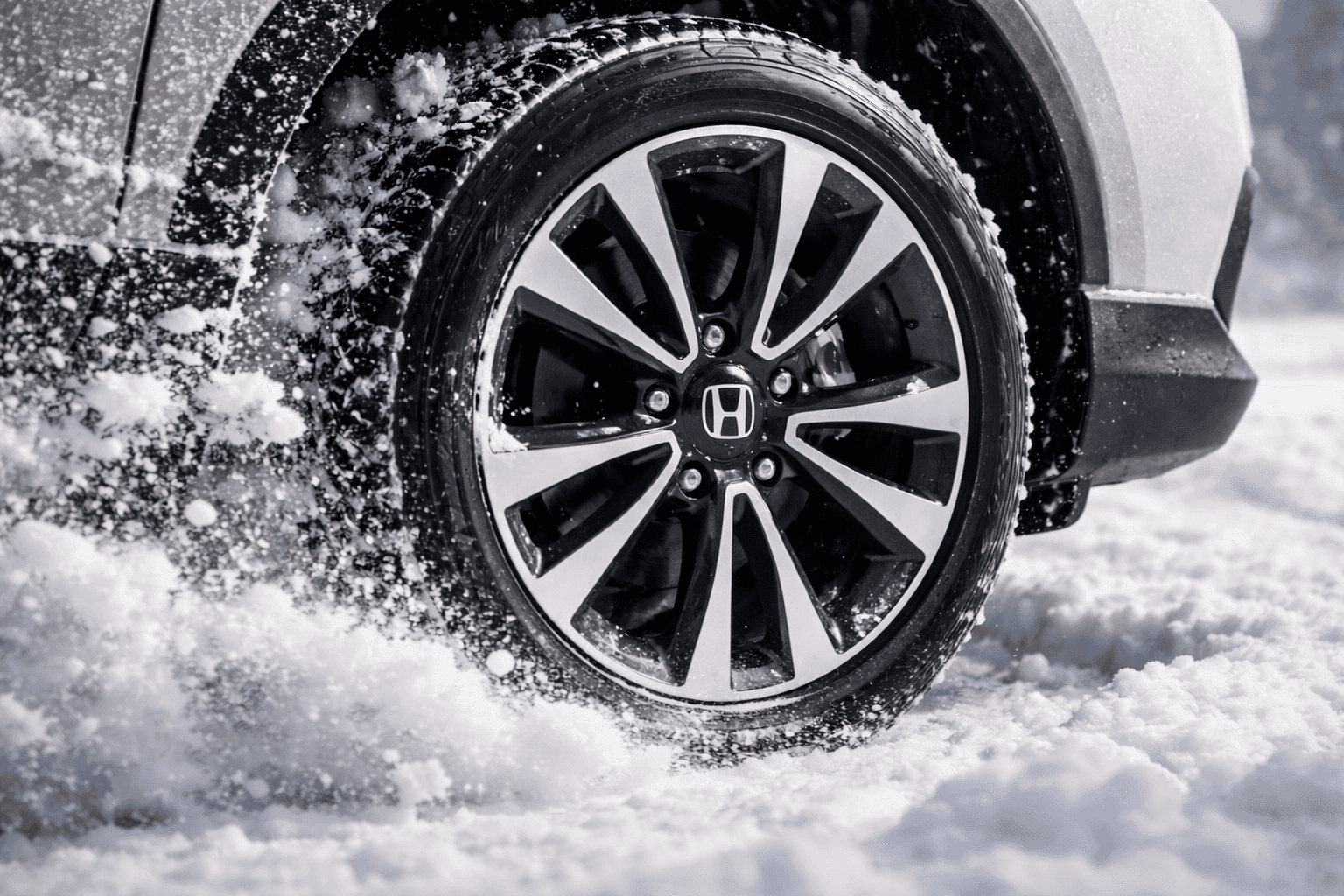
Close-up of a Honda alloy wheel and tire driving through snow, showing winter traction and performance in icy conditions.
Tires, Fluids & Brakes: Key Areas to Watch
Tires
Cold temperatures cause tire pressure to drop, reducing traction and fuel efficiency. Proper tread depth is critical for snow and icy conditions, making winter car care a top priority.
Fluids
Engine oil, coolant, brake fluid, and windshield washer fluid all play a vital role in cold-weather performance. Using manufacturer-recommended fluids helps your Honda start smoothly and run efficiently in winter.
Brakes
Snow, ice, and salt can accelerate brake wear. Regular inspections help prevent costly repairs and ensure confident stopping power when roads are slick.
Why Certified Honda Service Matters
Choosing Honda Certified Service means your vehicle is cared for by factory-trained technicians who understand your Honda inside and out. Benefits include:
-
Genuine Honda parts designed specifically for your model
-
Advanced diagnostic tools
-
Service tailored to Nebraska driving conditions
-
Protection of your vehicle’s performance and resale value
When it comes to long-term reliability, certified Honda service makes a real difference — especially with the demands of local weather.
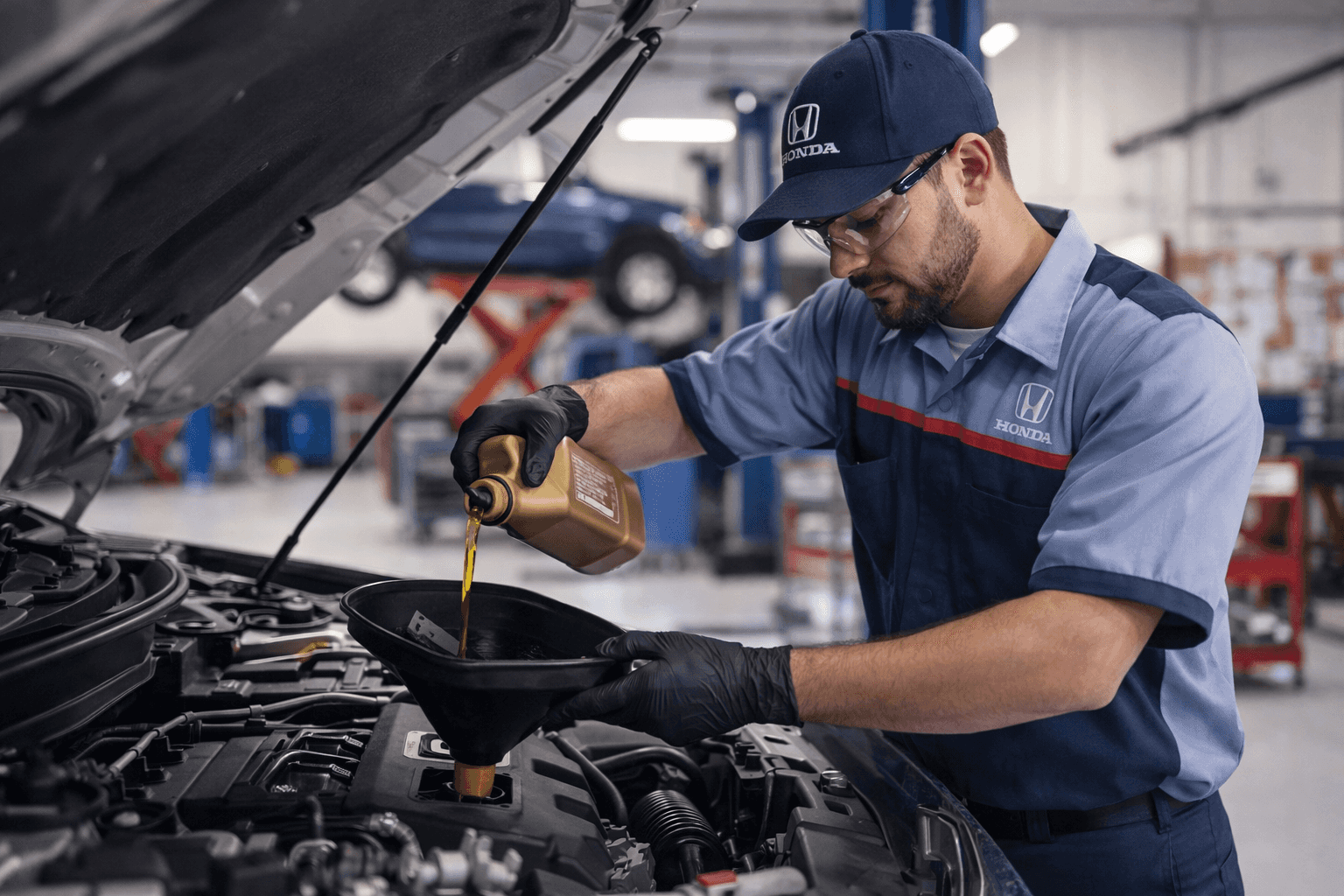
Certified Honda service technician performing an oil change in a professional auto service bay with vehicle hood open.
Schedule Your Honda Service Online Today
Whether you’re preparing for winter or staying ahead of routine maintenance, professional service helps your Honda perform at its best. Trust the experts at Woodhouse Honda for dependable Honda maintenance in Omaha and expert winter car care.
👉 Schedule your service appointment online today and drive with confidence in every Nebraska season.
0 comment(s) so far on How to Maintain Your Honda for Nebraska Weather